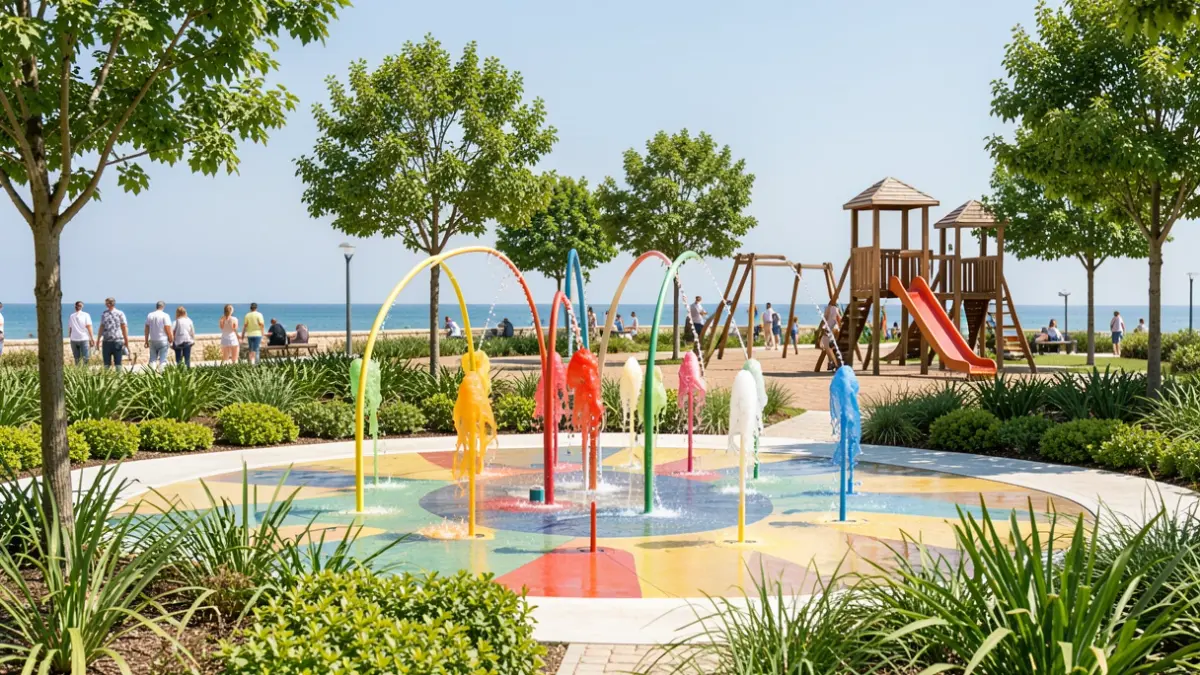
The centrepiece of Cleethorpes’ seafront, Pier Gardens is being revitalised with over 16,000 plants, more trees than ever before, a skatepark, wooden play area, splash pad, slides, and heritage trails. The project, supported by central Government LUF monies, has incorporated feedback from over 2,000 local residents who participated in Cleethorpes’ Masterplan. Key areas of focus included young people's activities, family spaces, nature, greenery, and areas for reflection.
North East Lincolnshire Council’s Portfolio Holder for Environment, Tourism and Culture, Cllr Bob Callison, visited the site with contractors Maylim to review the progress. Cllr Callison, a founder member of the Cleethorpes in Bloom team, expressed his delight at the extensive planting. He commented, “The shrubbery really is amazing. Every day something new is being put in or built and the whole thing is really starting to take shape.”
The scheme is reportedly on schedule for opening next year. Cllr Callison stated, “For years people have loved this space in the very heart of our great seaside resort. This new design will be fantastic, and a great addition to our ever-growing Cleethorpes. I truly believe that we have one of the best resorts in our country right here – this will be the number one spot in Britain, mark my words.”
Historically, Cleethorpes began as a fishing and farming community in the 1500s, evolving into a seaside resort by the 1700s. The land now known as Pier Gardens was set aside for public recreation in 1842. Following the arrival of the railway in 1863, the Manchester, Sheffield and Lincolnshire Railway company (MSLR) invested significantly in reinforcing sea defences and landscaping the cliff top into public gardens, completing work around 1881. The original gardens featured attractions such as a mock castle, camera obscura, tearoom, and bowling green.
Cliff Gardens were officially opened in 1885 by HRH Prince Albert Victor Christian Edward of Wales KG. The opening event included flag displays, a pavilion, and an ice archway. The gardens, which were a paid facility for many years, became free for public use in 1939.