
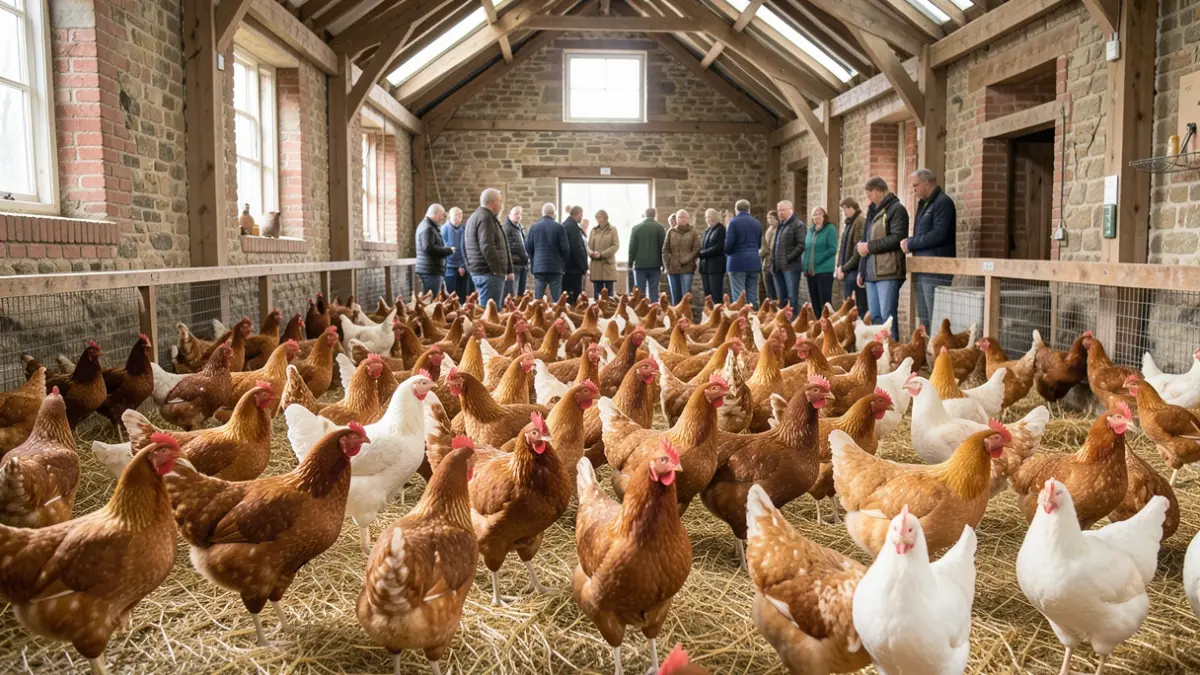
The order, which comes into force at 00:01 on Friday 13th November 2026, follows an increased risk and a growing number of confirmed cases of highly pathogenic avian influenza (HPAI), commonly known as bird flu, in both kept birds and wild birds across the country.
Under the new regulations, bird keepers throughout England must house all poultry and captive birds. This applies to those keeping 50 or more birds, with exceptions for certain zoo birds, and also to those who sell or distribute eggs, poultry products, or live birds.
An England-wide Avian Influenza Prevention Zone (AIPZ) has also been declared with immediate effect, enforcing mandatory biosecurity measures for all keepers, regardless of flock size or type. These measures aim to mitigate the risk of further outbreaks.
Enhanced biosecurity requirements include meticulous record-keeping, regular disinfection of housing and walkways, reporting changes in egg production, and disinfecting footwear, equipment, and vehicles. Keepers must also minimise the movement of people and equipment to and from bird housing areas, implement effective vermin control, and ensure feed and water are inaccessible to wild birds. Direct and indirect contact between captive birds and wild birds must be minimised, and birds should be kept in fenced or enclosed areas, with access to ponds and watercourses prevented.