
Facilitated by North East Lincolnshire Council, the fund supports educational settings in adapting their environments to create more inclusive spaces for pupils with SEND (Special Educational Needs and Disabilities).
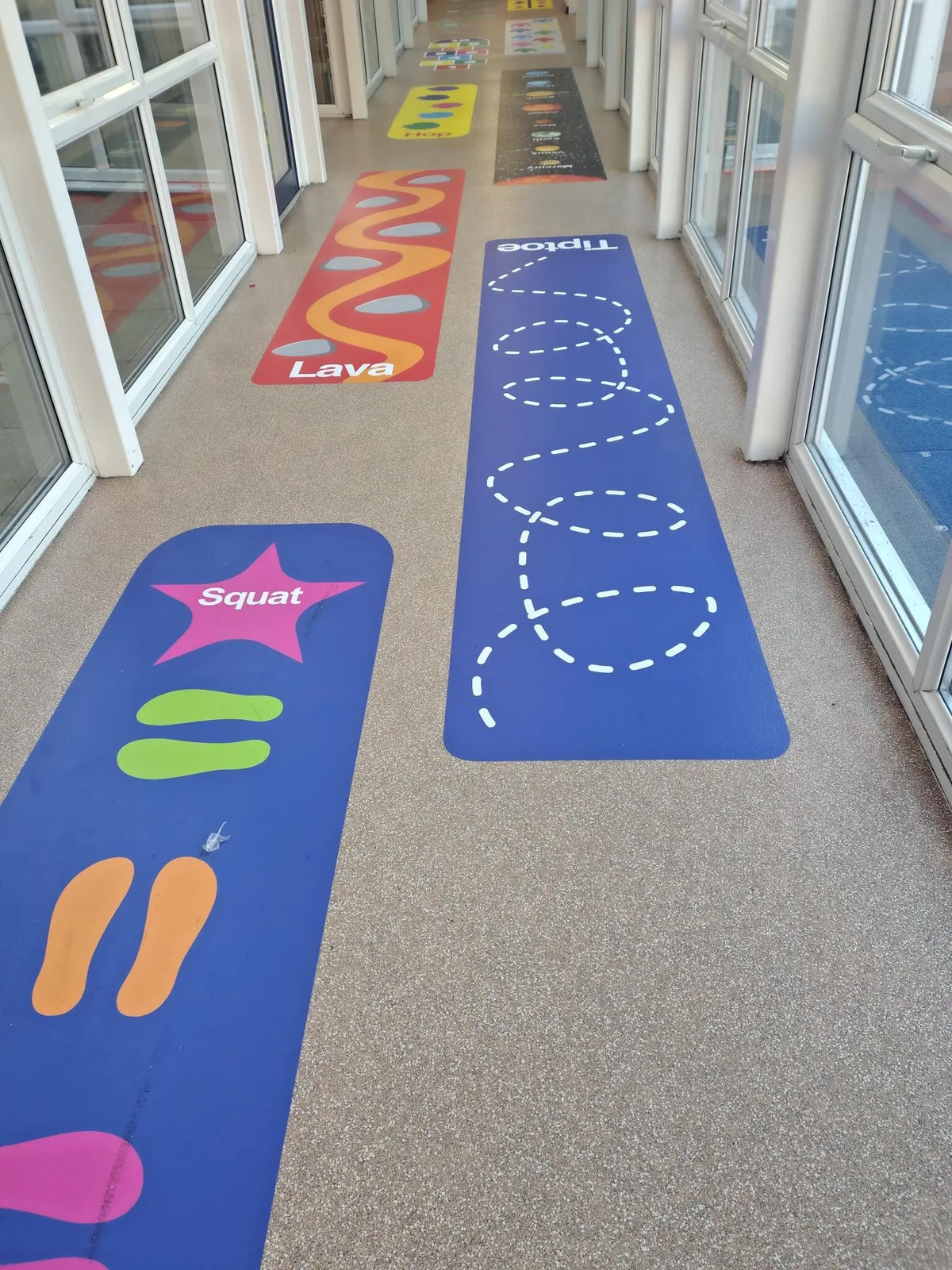
The academy has repurposed a main hallway into a sensory circuit, offering pupils opportunities for short, guided movement activities throughout the school day.
Samantha Haig, Special Educational Needs Coordinator (SENCo) at Reynolds Academy, explained: “The sensory circuit is a structured, inclusive space that supports pupils’ physical, emotional and cognitive development throughout the school day. Designed with purposeful movement activities along a corridor, it enables children to take part in brief guided exercises that help regulate their sensory systems before entering or returning to the classroom. For many pupils with SEND, particularly those with sensory processing differences, ADHD, autism or anxiety, movement is vital for maintaining focus and self-regulation.”
The circuit allows pupils to stretch, balance, push, pull, and move in ways that can either calm or energise their nervous systems, catering to individual needs. Rebecca Scott, Principal at Reynolds Academy, highlighted the benefits: “Evidence shows that short movement breaks can improve concentration, memory and overall academic performance. Integrating movement into a familiar school environment encourages healthy habits without disrupting learning time.”
Pupils in every class have circuit breaks on their timetable, which helps them return to class ready to learn, supporting attention, behaviour, and emotional resilience. Scott added, “While the space has been designed with pupils who have additional needs in mind, it benefits all children by promoting wellbeing and positive learning behaviours.” The circuit also encourages independence and fosters a more inclusive school culture.
Ann-Marie Matson, Director of Children’s Services at North East Lincolnshire Council, commented on the initiative: “The creative ways schools and settings are adapting their spaces to improve inclusion demonstrate a real commitment to meeting the needs of children and young people with SEND. Projects like this show how schools are thinking innovatively, creating flexible environments that provide targeted support for pupils with additional needs while benefiting the wider school community.”
Matson also noted the positive response to the High Needs Capital Grant Fund, stating: “The response to the High Needs Capital Grant Fund has been fantastic and reflects the dedication of teachers, SENCOs and school staff to embedding inclusion at the heart of everyday school life. It is encouraging to see settings investing in lasting improvements that will continue to support children and young people for years to come.” The third round of the fund, offering grants of up to £50,000, launches in December 2026.