Smoking's Impact on Reproductive Organs Detailed in New Study
Research from Sheffield and Nottingham universities reveals molecular changes in mouse ovaries and testes, offering insights into fertility.
By Leah Sutcliffe
••3 min read
AI
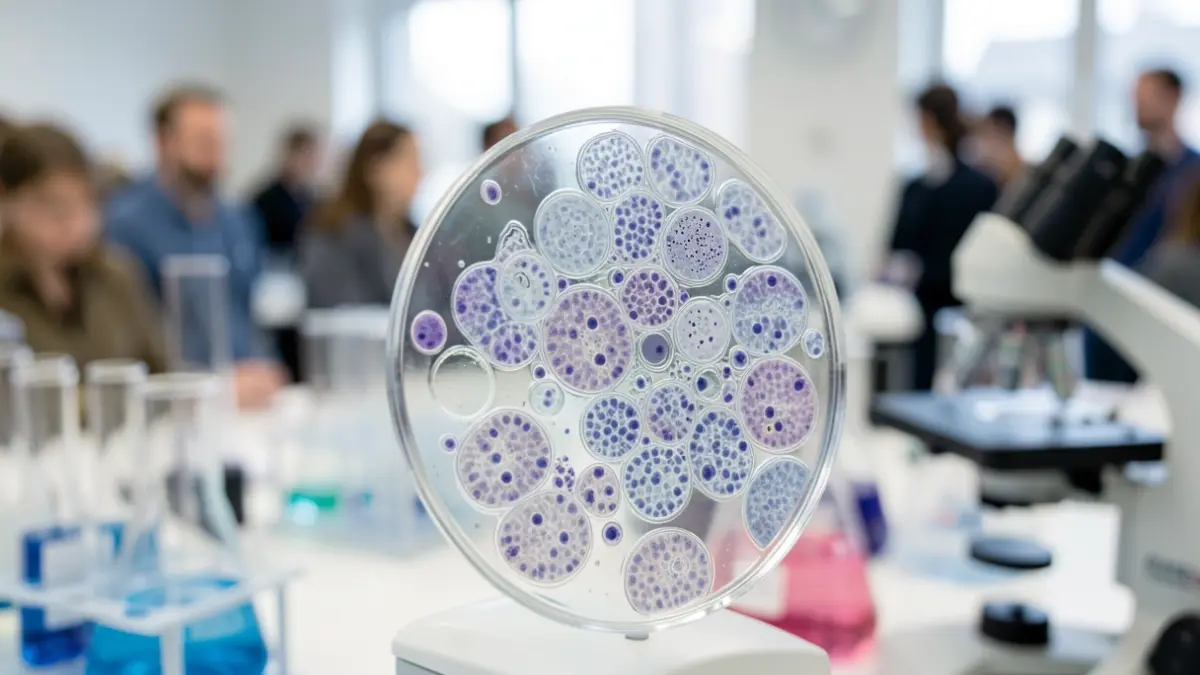
Generic image of microscopic cellular structures on a slide, with laboratory equipment in the background.
New research from the Universities of Sheffield and Nottingham has identified specific molecular changes in reproductive organs caused by cigarette smoke exposure, potentially explaining its impact on fertility.
Exposure to cigarette smoke could significantly affect reproductive health, with new research identifying changes in biological processes crucial for ovarian function and sperm production. The study, led by researchers from the Universities of Sheffield and Nottingham, examined how different levels of cigarette smoke affected the structure and gene activity in mouse ovaries and testes. These findings offer valuable insight into the biological processes that may help explain how smoking affects fertility in humans.
Globally, approximately one in six people experience infertility at some point in their lives, and while smoking is a well-established risk factor, its precise molecular effects on ovaries and testes have remained less understood. The study exposed male and female mice to cigarette smoke extract at varying doses for 12 weeks, subsequently examining the structure of their reproductive organs and measuring gene activity.
In female mice, the number and structure of ovarian follicles showed minimal change, even at higher smoke exposure levels. However, smoke exposure altered gene activity, reducing that of genes responsible for cell division and metabolism, while increasing activity in genes controlling protein production. These shifts are consistent with biological changes associated with accelerated ovarian ageing and declining fertility.
In males, higher levels of smoke exposure resulted in physical changes within the testes, including the enlargement of seminiferous tubules where sperm develop. Genes regulating sperm production became overactive, while protective genes against infection and inflammation showed reduced activity. These results suggest that cigarette smoke directly disrupts essential biological processes for healthy testicular function and sperm development.
“
"While it’s well-established that smoking is harmful to people's reproductive health, exactly how it does this is not fully understood. What this research interestingly showed is how differently the two organs responded to cigarette smoke."
“
"In the ovary, the overall structure of the tissue was unaltered, but the genes told a different story, we saw changes in those that regulate cell proliferation and protein synthesis. In the testis, the changes were visible in the tissue itself, with measurable differences in morphology, alongside altered expression of genes that regulate sperm production. These results suggest that the quality of the sperm and eggs produced might be compromised by smoking."
“
"While our study only looked at the effects of cigarette smoke on the ovaries and testes, it gives us valuable new insight into the potential mechanisms by which smoking affects reproductive health. We can now build on these findings to establish how these biological changes relate to fertility in humans."
“
"Our study has identified potential biological mechanisms that could help explain the link between smoking and reproductive health in both men and women."
“
"In females, we identified changes in gene activity associated with biological processes that have previously been linked to ovarian ageing and reduced ovarian function. In males, we found changes in genes involved in sperm production and testicular function."
“
"These findings are important because they help us understand how exposure to cigarette smoke could affect reproductive health. Further research will be needed to establish how these biological changes relate to fertility in humans."
Future research will focus on establishing whether parental smoking reduces the ability of mice to become pregnant and if the health of their offspring is affected. The research benefited from collaboration across teams and partners.